

The 8 Factors of Skin Aging

Dr. Nicola Pittoni's method

8 Factors

that cause skin aging
countered with targeted, scientifically selected actives
Discover how to tackle aging step by step
REMEMBER

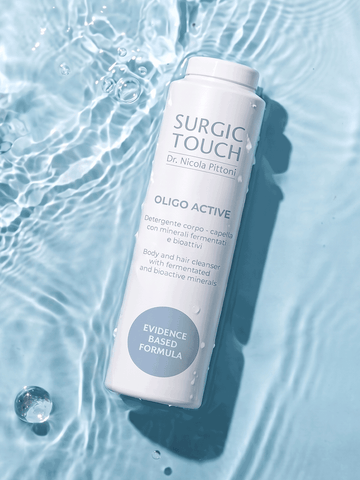
Thorough cleansing is the first step that prepares the skin for cosmeceuticals, amplifies their effectiveness, and if neglected, accelerates skin aging, compromising its health.

1
WATER
LOSS
2
DECREASE
IN CELLULAR ACTIVITY
3
COLLAGEN GLYCATION
DERMAL SAG
4
PHOTO AND CHRONO
AGING
5
SLOWING OF
CELLULAR TURNOVER
6
ELASTOSIS
7
EYELID RELAXATION
AND EYE CONTOUR
8
SKIN
PIGMENTATIONS
EVIDENCE
BASED
FORMULA
SCIENCE
AT THE SERVICE
OF SKIN

WATER LOSS

Skin dehydration is the first sign of aging. The skin progressively loses its ability to retain water, causing dryness, loss of firmness and the appearance of fine lines.

AGING
The Aesthetic Surgeon's answer

Hyaluronic acid of various molecular weights penetrates deeply, restoring skin hydration and volume. Concentrated formulations ensure an immediate and long-lasting effect.

EVIDENCE
BASED
FORMULA

DECREASE IN CELLULAR ACTIVITY

Over the years, the individual cells of the skin layers also age, losing energy and the ability to communicate with one another.

AGING
The Aesthetic Surgeon's answer

This ability, essential to keep the skin healthy and young, is restored by active ingredients such as DERMAXYL, ULVA LACTUCA EXTRACT and various ANTI-AGING PEPTIDES.

EVIDENCE
BASED
FORMULA

COLLAGEN GLYCATION - DERMAL SAG

The aging of elastic fibers and collagen invariably causes the facial structure to sag downward.

AGING
The Aesthetic Surgeon's answer

Only with the help of active ingredients targeted at preserving the dermal fibers is it possible to contain skin sagging.

EVIDENCE
BASED
FORMULA

PHOTO AND CHRONO AGING

Aesthetic medicine has widely demonstrated that, after genetic factors, sun rays are the leading cause of skin aging, through damage that reaches the cellular DNA.

AGING
The Aesthetic Surgeon's answer

To prevent photoaging it is essential to use cosmeceuticals able to shield the nuclei of skin cells and to provide antioxidant and regenerating substances capable of maintaining vitality and active replication.

EVIDENCE
BASED
FORMULA

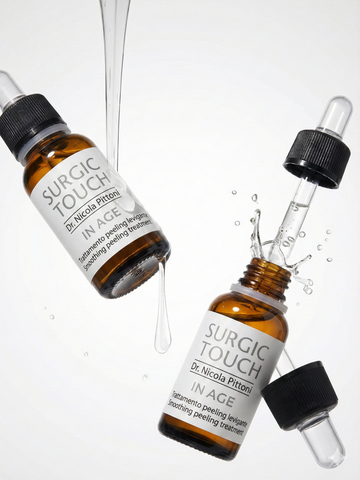
SLOWING OF CELLULAR TURNOVER

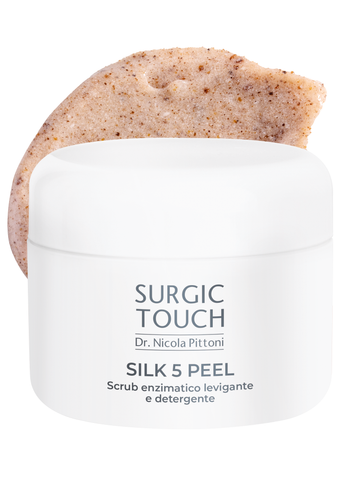
Under normal physiological conditions, young skin renews itself completely every 28 days. With aging this time lengthens, causing a greater build-up of dead cells on the surface, increased flaking and consequent skin dryness.

AGING
The Aesthetic Surgeon's answer

Through the targeted use of acids, it is possible to promote cellular turnover for young, radiant skin. Exfoliating acids such as Glycolic Acid and Salicylic Acid help gently remove dead cells from the skin's surface while stimulating the production of new cells. In addition, Resveratrol, light and weightless and rich in powerful active ingredients, performs a regenerating, smoothing, antioxidant and brightening action.

EVIDENCE
BASED
FORMULA

ELASTOSIS

Exposure to sun rays or tanning lamps causes the degradation of certain substances in the skin that lead to elastosis (photoaging).

AGING
The Aesthetic Surgeon's answer

Vitamin C, a powerful antioxidant that protects tissues, inhibits the action of free radicals and plays a key role in collagen synthesis. Vitamin E boasts a specific function against photoaging damage; its main biological function is to increase the use of oxygen by the cells, ensuring better capillary circulation.

EVIDENCE
BASED
FORMULA

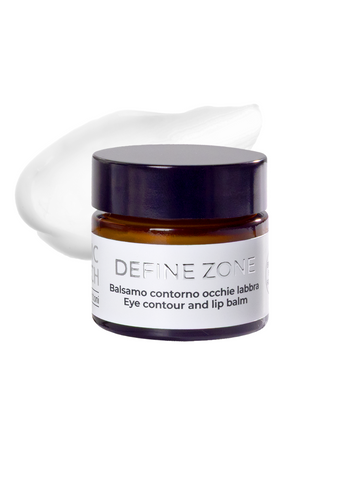
EYELID RELAXATION AND EYE CONTOUR

The lowering of the eyeball over the years causes the bags to protrude, leading to heaviness of the lower eyelid and fluid accumulation.

AGING
The Aesthetic Surgeon's answer

At the first signs of eyelid sagging it becomes necessary to act on capillary permeability, improving lymphatic circulation and preventing inflammatory phenomena caused by fatigue.

EVIDENCE
BASED
FORMULA

SKIN PIGMENTATIONS

Localized facial hyperpigmentation is caused by photoaging, in which several factors are involved: ultraviolet ray damage, hormonal changes (in women), and complexion.

AGING
The Aesthetic Surgeon's answer

When facial skin tends to darken, the combined action of substances that reduce the most superficial layer of the spot together with actives that specifically target the dark pigment is needed, ensuring an optimal attack on the dark patches.

EVIDENCE
BASED
FORMULA